Business Class Travel Consolidators: How They Work, Savings & Risks
To leverage business class consolidators, understand the wholesale pricing model, compare fare restrictions, and verify provider legitimacy before booking.

Executive verdict: Business class travel consolidators are legitimate B2B intermediaries that leverage unpublished, negotiated fares to reduce premium cabin costs; however, the value proposition is a trade-off between significant savings and reduced ticket flexibility, requiring a strict verification process before booking.
What Business Class Travel Consolidators Actually Cover
A business class travel consolidator operates as a wholesaler of airline seats, purchasing inventory in bulk or through specialized contracts to resell at a lower margin than the airline’s retail price. Unlike a standard retail travel agent who sells published fares via a Global Distribution System (GDS), a consolidator accesses a private layer of inventory. This allows them to offer unpublished airfares that are not visible to the general public on airline websites or common search engines.
The Wholesale Logic / The Role of Negotiated Rates
The core of the consolidator model is the ability to secure seats on international routes through strategic airline partnerships. By committing to specific volumes of traffic or utilizing niche distribution channels, these entities can unlock price points that bypass standard retail pricing. This wholesale approach transforms the premium cabin from a luxury retail product into a commodity that can be traded at a discount, provided the traveler accepts specific fare rules.
How Consolidator Pricing Mechanics Function
Consolidator pricing relies on the gap between public-facing fares and private contracts. Airlines often create specific fare buckets for wholesalers to fill seats that would otherwise remain empty, especially on long-haul flights to Europe, Asia, the Middle East, and Africa. These negotiated business class rates are designed to optimize load factors without cannibalizing the airline’s high-margin retail revenue, as they are restricted to specific channels.
Unpublished vs. Public Fares / The Booking and Issuance Flow
Public fares are standardized and available to any consumer, whereas unpublished fares are restricted to authorized partners. When a traveler submits a travel request, the consolidator scans these private inventories to find the lowest available match. The issuance flow differs from retail: the consolidator often manages the ticket validity and fare rules internally, issuing a ticket that adheres to the specific contract terms agreed upon with the carrier.
Real Benefits and Operational Constraints
The primary driver for using a consolidator is the immediate impact on the bottom line. Some operators report savings ranging from 30% to 72%, with many achieving a consistent 60% reduction compared to retail prices. These premium cabin discounts make high-end travel accessible for budgets that cannot justify full-fare business class tickets, effectively lowering the barrier to entry for executive-level comfort.
The Trade-off in Flexibility
These savings come with operational friction. Consolidator tickets often carry restrictive fare rules, meaning changes to dates or routes can be costly or entirely prohibited. Additionally, the relationship with frequent flyer programs is often compromised; many discounted tickets do not accrue miles or allow for the use of elite status benefits. The trade-off is a binary choice between maximum cost efficiency and maximum ticket flexibility.
Comparing Public Booking vs. Consolidator Channels
Choosing between a direct airline booking and a consolidator requires an analysis of the total cost of ownership. While the initial price point of the consolidator is lower, the lack of flexibility can lead to higher costs if the itinerary changes. To ensure travel consolidator legitimacy, one must weigh the immediate discount against the potential loss of loyalty points and the risk of rigid ticket validity.
| Feature | Public Booking | Consolidator Channel |
|---|---|---|
| Pricing | Published/Retail | Negotiated/Unpublished |
| Flexibility | High (Tier dependent) | Low (Strict rules) |
| Loyalty Points | Full Accrual | Limited or None |
| Support | Airline Direct | Third-party Agency |
This comparison demonstrates that the consolidator model is an optimization tool for fixed itineraries. For travelers with volatile schedules, the retail premium acts as an insurance policy for flexibility.
Verification Rules Before You Commit
The market for discounted flights attracts fraudulent operators who mimic the appearance of legitimate wholesalers. A critical danger in this sector is the « bucket shop » model, where tickets are sold without proper authorization or through stolen credentials. In severe cases, airlines may deny boarding if a ticket is found to be fraudulently obtained, leaving the traveler stranded without a refund.
Identifying Fraudulent Operators / The Due Diligence Checklist
Legitimate consolidators provide full-service support and transparent documentation. Fraudulent entities often rely on secrecy, demanding payment via non-secure methods or offering prices that are mathematically impossible given the airline’s cost structure. Verifying the agency’s standing with the Better Business Bureau or checking for IATA certification is a non-negotiable step.
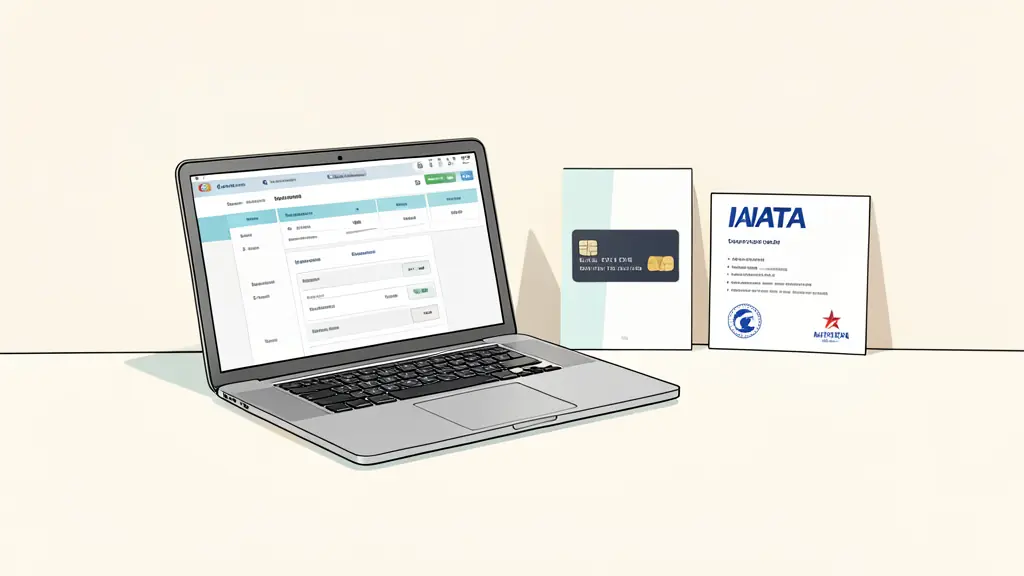
To verify a provider, apply the following protocol:
1. Confirm the agency holds a valid IATA or ARC certification.
2. Verify that payment is processed through secure, encrypted gateways rather than wire transfers.
3. Request a detailed breakdown of the fare rules and ticket validity before payment.
4. Cross-reference the agency’s physical address and corporate history via business registries.
5. Check for a history of verified customer reviews on independent platforms.
The right move is not to ask if a discount is possible, but to verify if the discount is legitimate.
Envie d'aller plus loin ?
Laisse ton email, on te prévient dès qu'un nouvel article sort.