Cafe Business Plan: The Strategic Framework for Profitability and Funding
To build a winning cafe business plan, start with a market audit, sequence your operations, project your financials, and compare business models for ROI.
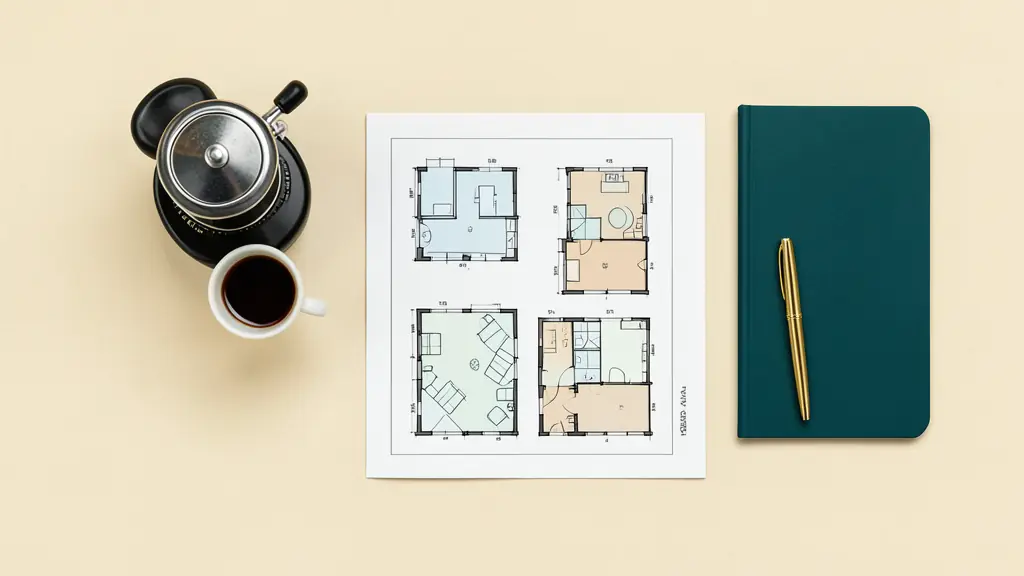
Executive verdict: A cafe business plan is not a creative writing exercise or a mere requirement for a bank loan; it is a strategic stress test designed to identify operational friction and financial leakage before a single dollar of capital is deployed. The real starting point is the validation of unit economics and foot traffic, not the selection of a roast. This guide establishes the rigorous sequence required to move from a concept to a funded, scalable asset.
Audit Your Concept and Market Demand Before Drafting
Developing a cafe business plan begins with a cold analysis of the local environment. Many operators fail by prioritizing the menu over the market, assuming that high-quality coffee automatically generates demand. Profitability is instead driven by the intersection of foot traffic, neighborhood demographics, and the specific spending habits of the target market.
Validating Local Demand
Data must precede design. This requires physical observation of the proposed location to count foot traffic during peak morning and afternoon windows. Analyzing the proximity of residential hubs and commercial districts allows for a precise revenue forecast based on estimated conversion rates. Interviewing potential customers helps identify gaps in the current market, such as a lack of specialty coffee or a need for faster service speeds.
Defining the Competitive Edge
A unique selling proposition (USP) differentiates a shop from both corporate chains and other independent cafes. Whether the edge is based on single-origin coffee, nitro coffee, or a hybrid cafe model, it must be linked to a specific customer persona. This strategic positioning directly impacts coffee shop startup costs, as the choice between a minimalist walk-up window and a full-service luxury lounge dictates the required capital expenditure for leasehold improvements.
Sequence Your Operational Framework for Scalability
Operational excellence is the only way to protect margins as a business scales. Once the market is validated, the focus shifts to the internal architecture. This involves creating a management profile that highlights transferable skills and establishing standard operating procedures (SOPs) that ensure consistency across every cup served, regardless of which barista is on shift.
Structuring the Management Stack
The management plan must outline a clear hierarchy and payroll structure. Beyond the owner, the plan should detail the roles of shift leads and baristas, including training requirements and wage benchmarks. Labor productivity is a primary driver of GOPPAR, and a lean staffing model prevents operational friction from eroding the bottom line during slow trading periods.
Engineering the Menu for Margin
The product line is a financial tool, not just a culinary list. Menu engineering involves analyzing the contribution margin of each item, from espresso and cold brew to alternative milk options and pastries. By balancing high-margin items with specialty coffee offerings, operators can optimize their overall cost of goods sold (COGS). This operational rigor is what informs the cafe financial projections, ensuring that revenue targets are grounded in realistic transaction volumes.
Build Lender-Ready Financial Projections
Lenders and investors ignore narratives; they analyze cash flow and solvency. Financial projections must transition from optimistic guesses to a three-year model based on daily customer-count assumptions and average ticket calculations. This section requires a precise integration of the income statement, the balance sheet, and the cash flow statement.
Forecasting Revenue and Cash Flow
Revenue forecasts are built on the relationship between foot traffic and the average transaction value. The cash flow statement must account for initial investment, monthly operating expenses, and the necessary working capital to survive the first six months of ramp-up. A critical component is the depreciation schedule for expensive equipment, which impacts the balance sheet and overall tax liabilities.
Calculating the Break-Even Point
The break-even point is the exact volume of sales required to cover all fixed and variable costs. A professional coffee shop break-even analysis calculates the daily transaction volume needed to reach zero profit, providing a clear target for the management team. This calculation must include rent-to-sales ratios and labor costs to determine if the business model is sustainable or if pricing adjustments are required to maintain liquidity.
Compare Cafe Business Models for Optimal ROI
The choice of business model dictates the capital expenditure (CAPEX) and the level of operational control. While an independent shop offers maximum creative freedom and agility, a franchise provides a proven system and reduced risk. Mobile coffee carts and hybrid models offer lower entry costs but face different scalability constraints.
To build a lender-ready business plan, the operator must justify the chosen model through a comparative analysis of expected returns and risk profiles.
| Model | Initial CAPEX | Operational Risk | Scalability |
|---|---|---|---|
| Independent | High | High | Moderate |
| Franchise | Moderate | Low | High |
| Mobile Cart | Low | Moderate | Moderate |
| Hybrid Cafe | Moderate | Moderate | High |
The data suggests that while independent models allow for higher long-term brand equity, franchises reduce the failure rate by implementing pre-tested SOPs. The decision rests on whether the operator values creative control over the speed of expansion.
Secure Your Investment and Mitigate Launch Risks
The final phase of the plan is the mitigation of catastrophic risk. This involves securing the necessary legal permits and insurance policies to protect the asset from liability and unforeseen disruptions. A resilient plan includes sensitivity analysis (scenario planning) to determine how the business would perform under a 20% increase in COGS or a significant drop in foot traffic.
Before signing a lease or deploying capital, the following verification steps are mandatory:
- Validation of all local government permits and food safety licenses.
- Procurement of general liability insurance, product liability insurance, and workers’ compensation.
- Final review of the lease agreement for flexibility and renewal terms.
- Establishment of a business line of credit to ensure working-capital coverage.
- Execution of a soft opening to test menu profitability and service speed.

The final strategic arbitrage is the choice between agility and stability. Launching as a lean, independent operator maximizes the potential for high margins and brand uniqueness, but it requires the owner to build every system from scratch. Adopting a franchise model trades that creative control for proven scalability and a significantly reduced risk of early-stage failure.
Compare three different insurance quotes for product liability and verify the specific requirements of your local food safety authority before committing to any leasehold improvements.
Envie d'aller plus loin ?
Laisse ton email, on te prévient dès qu'un nouvel article sort.